Fish welfare
Bring suitable landing and unhooking equipment, handle fish gently, and follow the club’s current species-specific rules.

BEYOND THE BANK
Meet St James Lake — a beautiful corner of Brackley and home to a diverse range of coarse fish.
A BRACKLEY LANDMARK
Tucked away on the south-western edge of Brackley, St James’ Lake is much more than a beautiful place to spend an afternoon fishing. Its story reaches back centuries, to a landscape once shaped by Brackley Castle and its medieval fishponds.
The lake we enjoy today was created in 1976 as part of the town’s water-management infrastructure. Over time it became a much-loved green space where fishing, wildlife and the local community come together.
In 2016, Brackley Town Council improved access with a kilometre-long path and picnic facilities. Today, waterbirds, fish and wetland wildlife share the lakeside with local anglers and visitors.

THROUGH THE YEARS
MEDIEVAL
Historic records identify fishponds beside the Norman motte-and-bailey castle, built soon after 1086. The exact relationship to today’s lake is not fully established.
1976
The modern balancing lake was built to help manage drainage linked to Brackley’s growing residential areas.
2016
A meandering perimeter path and picnic area improved access for walkers, families and anglers.
WILD BRACKLEY
Close to the north-east side is the Pocket Park, on part of the former Banbury–Brackley railway branch line. Mature hedgerows, wetland habitat and the lakeside setting make this a special place for nature as well as fishing.
The lake sits in a park of around five acres, with wildlife to watch in every season.

ELEVEN FISH VARIETIES · THE CLUB STOCK LIST
Explore eleven types of fish listed in the club’s existing fish stock list. Each card shows a real species reference photograph and expands to give practical fishing, habitat and care advice.
Reference photographs are from elsewhere, not necessarily caught at St James’ Lake. Always follow club rules. Online images need an internet connection.

Carp family
Cyprinus carpio
Spot the fish: A fully scaled, powerful bottom-feeding fish. Look for bubbles and subtle movement near margins.
How to catch: A small, tidy presentation with permitted boilies, pellets or sweetcorn. Start with a modest amount of feed rather than overfeeding.
When and where: Spring through autumn is often productive; adapt to conditions.
Fish care and club rules: Use a suitably large landing net and wet unhooking mat. Always keep fish low and support the body.

Carp family
Cyprinus carpio
Spot the fish: A carp with large, irregular scales; the feeding approach is much the same as for common carp.
How to catch: Seek clear patches near features and present a safe, simple bottom rig with a permitted bait.
When and where: Watch for rolling or bubbling fish instead of casting blindly.
Fish care and club rules: Avoid fixed-lead rigs and trebles; follow club carp hook rules.
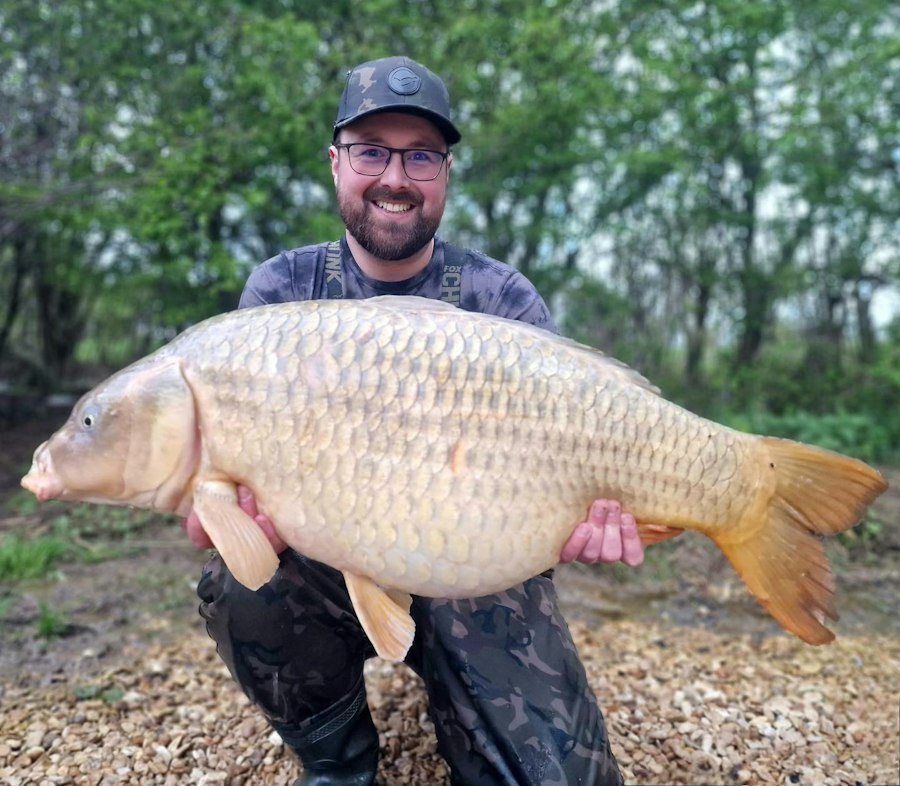
Carp family
Cyprinus carpio (ornamental hybrid)
Spot the fish: Recognisable by pale silver, cream or gold colouring, sometimes with a darker head.
How to catch: Fish for them with the same thoughtful carp tactics as for common and mirror carp.
When and where: Quiet margins and signs of feeding can matter more than distance.
Fish care and club rules: The same carp unhooking, net and mat requirements apply.

Carp family
Cyprinus carpio (ornamental variety)
Spot the fish: Brightly coloured ornamental carp. Their vivid patterns can make them easier to spot in clear water.
How to catch: Try a carefully presented permitted carp bait rather than chasing or repeatedly casting at visible fish.
When and where: Look for natural feeding behaviour and avoid spooking them.
Fish care and club rules: Handle with wet hands, keep off dry ground and return promptly.

Coarse fish
Tinca tinca
Spot the fish: Olive-green fish often associated with weed edges and softer lakebed areas.
How to catch: Float fish close to weed or use a simple permitted bottom presentation with sweetcorn or worms.
When and where: Late spring and summer mornings can be rewarding.
Fish care and club rules: Use a suitable landing net; unhook over a wet mat.

Coarse fish
Abramis brama
Spot the fish: Deep-bodied shoaling fish that may show themselves by gentle bubbles.
How to catch: A feeder or pole approach with a measured amount of groundbait and permitted hookbait can work well.
When and where: If you find a shoal, feed consistently but do not overdo it.
Fish care and club rules: Keep fish low and minimise time out of the water.

Coarse fish
Rutilus rutilus
Spot the fish: Silver fish with red-orange fins; a fine target for newcomers and experienced float anglers alike.
How to catch: A light float rig with maggots, casters or bread can help detect delicate bites.
When and where: Try different depths and keep loose feed light.
Fish care and club rules: Use suitable small hooks and unhook fish swiftly with wet hands.

Coarse fish
Scardinius erythrophthalmus
Spot the fish: A golden-silver fish with reddish fins, often feeding higher in the water.
How to catch: A light float presentation with bread or maggots near the surface may work in suitable conditions.
When and where: Watch for feeding signs around surface cover in warmer weather.
Fish care and club rules: Keep handling gentle; avoid contact with dry ground.

Predator
Perca fluviatilis
Spot the fish: Distinctive dark vertical bars and a spiny dorsal fin.
How to catch: Try float-fished worms by cover. Lures or spinning are only permissible during the club’s pike season.
When and where: Look for small-fish activity and changes in depth.
Fish care and club rules: Watch the spines when unhooking; follow the club’s seasonal restrictions.

Predator
Esox lucius
Spot the fish: A large ambush predator with a long snout and sharp teeth. Specialist tackle and handling skills are essential.
How to catch: During the club pike season (1 October–31 March), experienced anglers may use permitted dead sea baits with a proper wire trace. Livebaiting is banned.
When and where: Avoid targeting pike outside the club pike season.
Fish care and club rules: Club rules specify minimum 15-inch wire traces, appropriate unhooking tools and a 36-inch landing net. Seek expert tuition first.

Coarse fish
Squalius cephalus
Spot the fish: A broad-headed, silver-bronze fish known for taking a variety of natural baits.
How to catch: Try a float or light ledger presentation with permitted bread, worms or maggots near suitable cover.
When and where: Observe the water and avoid heavy disturbance.
Fish care and club rules: Use a suitable net and release promptly.
Important: These are general angling suggestions only. The current club rules govern tackle, seasons, bait and fish welfare, including the pike and lure season. For specialist pike fishing, learn safe unhooking techniques before targeting pike.
FROM THE CLUB GALLERY
Take a look at catches and bankside photographs from the club’s existing gallery.

THE PLACE
St James Lake lies to the south-west of Brackley in a park of around five acres. The lake was created in 1976 as a balancing lake and is now a cherished local place for angling and wildlife.
LOCAL HERITAGE
In 2016, Brackley Town Council developed a kilometre of formal pathway around the lake, including a picnic area. Nearby, the Pocket Park occupies a former railway branch line.
ST JAMES LAKE
Enjoy the natural surroundings and learn what makes the club special.
GOOD TO KNOW
Juniors under 12, fish for free. However, you must still apply for a membership and be accompanied by an adult at all times. You must be under 12 at the start date of the permit
No, you will be charged the normal yearly fee for a 3rd rod.
A guest 24hr night permit can only be purchased by a yearly night member holder for their guest. A guest night permit can not be purchased by a non-member.
At the moment, there are no toilet facilities at the lake. However, the town centre toilets are only a short walk away.
Protecting fish, wildlife and the lakeside for everyone.
Bring suitable landing and unhooking equipment, handle fish gently, and follow the club’s current species-specific rules.
Help avoid spreading invasive species by checking equipment for plants and animals, cleaning it and allowing it to dry between waters.
Take home litter and discarded line, keep pathways clear and report problems to the committee.