
THE NEXT GENERATION
Your friendly first-fishing guide for St James’ Lake. Discover what to bring, how to start, and how to care for every fish.
WELCOME TO FISHING
Learn the basics at your own pace. A short, comfortable session with a responsible adult is a great way to begin your journey.
FIRST TIME
Learn simple float-fishing skills, practise casting safely and ask an adult to help with hooks.
STARTER KIT
Start with a manageable rod and a suitable landing net and wet unhooking mat.
PARENTS
Club membership, supervision and rod-licence requirements depend on age.
SIX EASY STEPS
Enjoy being outdoors as well as fishing. Good fish care is more important than catching a lot.
01
Check lake notices, find an available permitted peg and leave paths clear.
02
Ask an adult to help with rod, line, float and hook. Make sure the casting area is clear.
03
Set out a suitable landing net, wet mat and unhooking tools before you fish.
04
Look out for bites, stay patient and enjoy spotting wildlife.
05
Use the net, wet hands and a mat. Let an adult help, especially with difficult hooks.
06
Return the fish carefully and promptly. Take all discarded line and litter home.
BEGINNER BASICS
Keep it simple. An experienced adult can check you have a safe setup for the fish and current club rules.
You do not need expensive specialist tackle for your first float-fishing session. Ask the club before you buy.

FISH CARE
Ask a responsible adult to help you unhook fish. Keep fish well supported and never handle them with dry hands.
WET HANDS
Wet your hands, keep fingers away from the gills, and never squeeze a fish.
KEEP FISH LOW
Use a suitable soft landing net and wet unhooking mat. Keep fish low to the ground.
BACK IN THE WATER
Be gentle and quick, and let an adult help when a fish is large or difficult to unhook.
Safety first: keep away from slippery edges and never enter the lake to retrieve lost tackle. Pike fishing requires specialist knowledge and equipment, so leave it to experienced anglers. Follow the full club rules.
MEET OUR FISH
Here are eleven species to recognise. The images are examples; colours and sizes may vary.

Carp family
Cyprinus carpio
Spot the fish: A fully scaled, powerful bottom-feeding fish. Look for bubbles and subtle movement near margins.
How to catch: A small, tidy presentation with permitted boilies, pellets or sweetcorn. Start with a modest amount of feed rather than overfeeding.
When and where: Spring through autumn is often productive; adapt to conditions.
Fish care and club rules: Use a suitably large landing net and wet unhooking mat. Always keep fish low and support the body.

Carp family
Cyprinus carpio
Spot the fish: A carp with large, irregular scales; the feeding approach is much the same as for common carp.
How to catch: Seek clear patches near features and present a safe, simple bottom rig with a permitted bait.
When and where: Watch for rolling or bubbling fish instead of casting blindly.
Fish care and club rules: Avoid fixed-lead rigs and trebles; follow club carp hook rules.
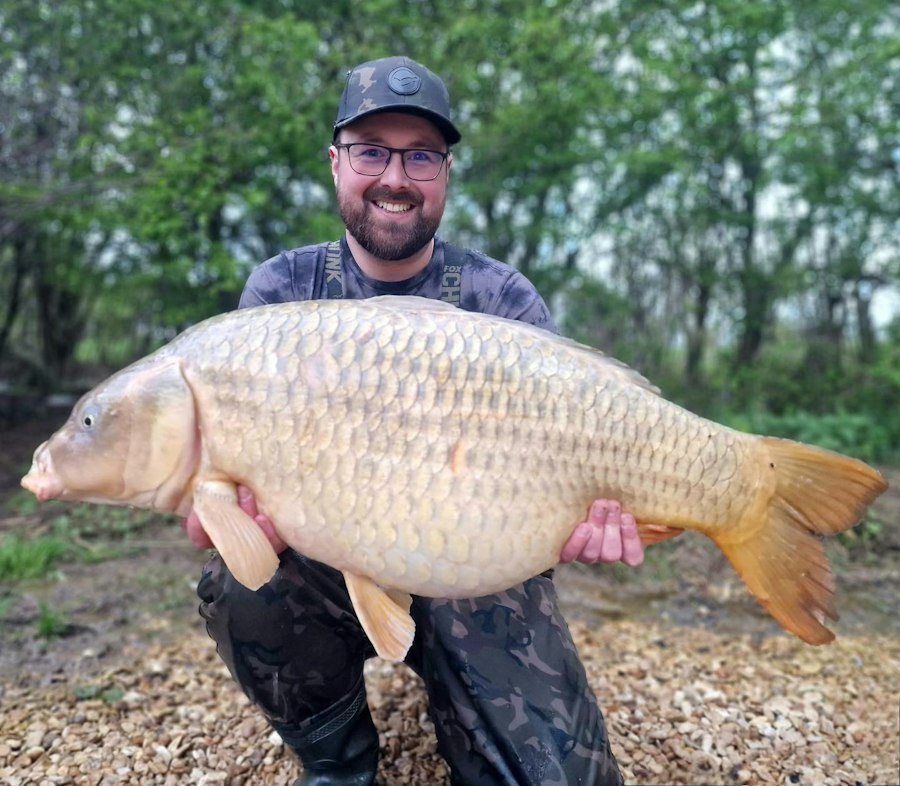
Carp family
Cyprinus carpio (ornamental hybrid)
Spot the fish: Recognisable by pale silver, cream or gold colouring, sometimes with a darker head.
How to catch: Fish for them with the same thoughtful carp tactics as for common and mirror carp.
When and where: Quiet margins and signs of feeding can matter more than distance.
Fish care and club rules: The same carp unhooking, net and mat requirements apply.

Carp family
Cyprinus carpio (ornamental variety)
Spot the fish: Brightly coloured ornamental carp. Their vivid patterns can make them easier to spot in clear water.
How to catch: Try a carefully presented permitted carp bait rather than chasing or repeatedly casting at visible fish.
When and where: Look for natural feeding behaviour and avoid spooking them.
Fish care and club rules: Handle with wet hands, keep off dry ground and return promptly.

Coarse fish
Tinca tinca
Spot the fish: Olive-green fish often associated with weed edges and softer lakebed areas.
How to catch: Float fish close to weed or use a simple permitted bottom presentation with sweetcorn or worms.
When and where: Late spring and summer mornings can be rewarding.
Fish care and club rules: Use a suitable landing net; unhook over a wet mat.

Coarse fish
Abramis brama
Spot the fish: Deep-bodied shoaling fish that may show themselves by gentle bubbles.
How to catch: A feeder or pole approach with a measured amount of groundbait and permitted hookbait can work well.
When and where: If you find a shoal, feed consistently but do not overdo it.
Fish care and club rules: Keep fish low and minimise time out of the water.

Coarse fish
Rutilus rutilus
Spot the fish: Silver fish with red-orange fins; a fine target for newcomers and experienced float anglers alike.
How to catch: A light float rig with maggots, casters or bread can help detect delicate bites.
When and where: Try different depths and keep loose feed light.
Fish care and club rules: Use suitable small hooks and unhook fish swiftly with wet hands.

Coarse fish
Scardinius erythrophthalmus
Spot the fish: A golden-silver fish with reddish fins, often feeding higher in the water.
How to catch: A light float presentation with bread or maggots near the surface may work in suitable conditions.
When and where: Watch for feeding signs around surface cover in warmer weather.
Fish care and club rules: Keep handling gentle; avoid contact with dry ground.

Predator
Perca fluviatilis
Spot the fish: Distinctive dark vertical bars and a spiny dorsal fin.
How to catch: Try float-fished worms by cover. Lures or spinning are only permissible during the club’s pike season.
When and where: Look for small-fish activity and changes in depth.
Fish care and club rules: Watch the spines when unhooking; follow the club’s seasonal restrictions.

Predator
Esox lucius
Spot the fish: A large ambush predator with a long snout and sharp teeth. Specialist tackle and handling skills are essential.
How to catch: During the club pike season (1 October–31 March), experienced anglers may use permitted dead sea baits with a proper wire trace. Livebaiting is banned.
When and where: Avoid targeting pike outside the club pike season.
Fish care and club rules: Club rules specify minimum 15-inch wire traces, appropriate unhooking tools and a 36-inch landing net. Seek expert tuition first.

Coarse fish
Squalius cephalus
Spot the fish: A broad-headed, silver-bronze fish known for taking a variety of natural baits.
How to catch: Try a float or light ledger presentation with permitted bread, worms or maggots near suitable cover.
When and where: Observe the water and avoid heavy disturbance.
Fish care and club rules: Use a suitable net and release promptly.
PARENTS & GUARDIANS
A club permit is different from an Environment Agency rod licence. Both sets of requirements matter.
UNDER 12
Club guidance says under-12s fish free, but must obtain membership and be accompanied by an adult. Under-13s do not need an Environment Agency rod licence.
AGES 12–15
The club requires parental consent for 12–15-year-olds to fish unaccompanied. Ages 13–16 need a free Environment Agency junior rod licence.
AGE 16–17
Age 16: free junior rod licence. Age 17: an appropriate paid rod licence. Check the club’s junior permit rules.
UNDER 18 AT NIGHT
A senior member aged at least 21 must be present in an adjacent peg throughout. Junior night fishing also requires the appropriate permit.
Read the full club rules (particularly 23–25) and official rod-licence guidance. These short notes are not substitutes for the full requirements.
BEFORE YOU GO
An interactive checklist for children and parents. It works locally in the browser without collecting any names.
Tick these together before you go. Nothing is saved or sent to the club.
0 of 8 readyJUST FOR FUN
Enjoy nature and learning together, not just the number or size of fish you catch.
CHALLENGE 1
Spot three birds, insects or other creatures without disturbing them.
CHALLENGE 2
Learn to identify three fish species by their fins and colour.
CHALLENGE 3
Practise safe fish care and leave your peg cleaner than you found it.
QUESTIONS
READY TO GIVE FISHING A TRY?
Start with the rules, choose a calm day, and enjoy your first visit together.